Начало
 Контакти
Механично поведение и пространствено предаване на усилията в преходните конструктивни елементи при исторически зидани куполи
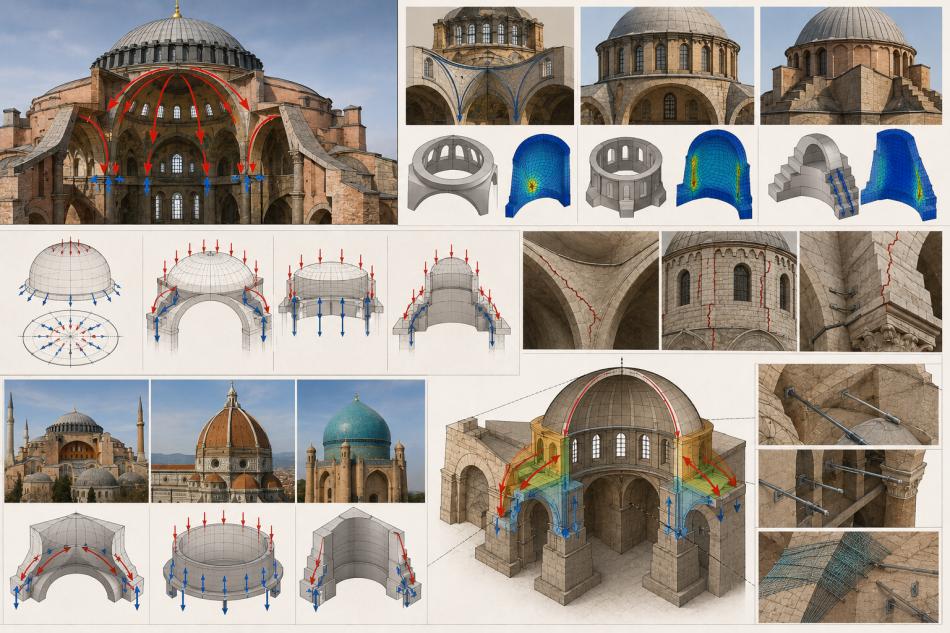
Преходните конструктивни елементи при историческите зидани куполи осигуряват връзката между купола и носещата конструкция и имат съществено значение за пространственото предаване на усилията. Настоящото изследване анализира механичното поведение на трите основни типа преходни елементи – пандантиви, барабани и тромпи. Формулирана е хипотезата, че независимо от конструктивните си различия те изпълняват една и съща основна механична функция – непрекъснато пространствено предаване и преразпределение на усилията между купола и носещата система. За проверка на хипотезата е приложен сравнителен анализ на три представителни исторически куполни конструкции – Hagia Sophia, Santa Maria del Fiore и Soltaniyeh. Получените резултати показват, че характерните повреди са свързани с нарушаване на пространственото предаване на усилията в преходната зона, независимо от използвания конструктивен тип. Предложеният инженерномеханичен подход може да подпомогне обследването, оценката на техническото състояние и избора на подходящи методи за укрепване на исторически куполни конструкции.